…..from A Squandered Life / the 1960s
.
Chomay ’65
….I followed like a deep sea diver with my own personal atmosphere and leaden boots.
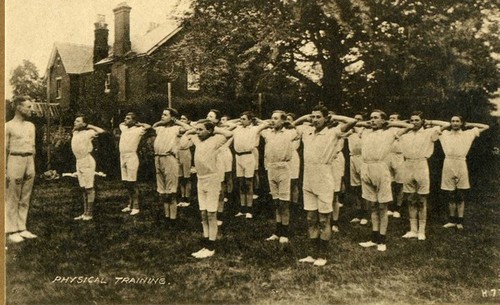
High school Physical Education (PE in the UK, but referred to by us simply as “gym”) was a whole order above anything we’d experienced in elementary school. Everything seemed so “professional”. There wasn’t just a single PE teacher; there were staff and a “department”!
The head of department was the legendary Mr Chomay. Most of us had heard of him through elder siblings. In the flesh he was a remarkably magnetic man. When he looked at you, you were immediately in full lock on and compelled, almost hypnotically, to listen to every word he had to say. When he didn’t look at you, you felt you were missing out on something. If you misbehaved in any way he would walk up to you, fix you with his x-ray vision, and say, “Take off your shoe.” As you bent down to take off your shoe, he would go off and take care of some business elsewhere. In the meantime, you just stood there, ridiculously holding one shoe in your hand, awaiting your fate.
He would eventually return, hold out his hand for your shoe, and wait for you to bend over (everybody knew the form). “Bend your knees,” he would say, apparently for health & safety reasons, then haul back and give you such a full on single swipe that your arse would almost ring. This would be followed by a moment of numbness, and then such a sting that your eyes would water and you wouldn’t know what to do with yourself. He’d hand you back your shoe and then carry on without so much as a backward glance. Re-fitting the shoe was always a problem because bending over again or sitting down was simply not possible for the next few minutes. It was his cold blooded matter of factness which made the whole thing so chillingly unrepeatable. Nobody ever tempted fate to act like a cool rebel with Chomay. Even the bad guys avoided recidivism.
Very early on Chomay made it clear that we were expected to source and wear “athletic supports”. These we knew as “jock straps” and we were expected to pull one of the stretchy straps out from under our shorts and let them snap back to prove that we were actually wearing one. We were given a couple of weeks grace, but not being able to “snap” after the deadline was punishable by shoe.
I needed the impetus of the shoe to force me into action. I couldn’t bring myself to discuss such a thing with my parents or anyone else. I didn’t even know what sort of shop might have them. I went into our local hardware store which also doubled as a limited sporting goods outlet. After wandering hopelessly around the hockey sticks and the baseball gloves looking for the damn things, I had to drum up the courage to speak to the wiry little man who ran the shop. “Athletic support?” he queried, “You mean like for a bicycle?” As I flushed red before him the penny finally dropped. He managed to control his face and said, “Oh, I think you need the drug store across the street.” A drug store? Who knew flipping drug stores would harbour athletic devices of any kind, but sure enough, I found them and, after further but lesser mortifications, saved myself from the shoe.
The last sport of the school year was athletics, at which I was largely hopeless, but I went for the long distance running because it was something to do and my friend Steve was doing it and clearly enjoying it. Besides, as the Canadian spring bends the will of winter the earth begins to surrender pungency and flowing water and the sun begins to heat the shoulders. As the grip of the ice and snow relents it’s not just the plants that discover new vigour. On the first few runs the roads felt positively elastic as our legs celebrated their freedom from oppressive vestments and enforced central heating.
An added incentive was the direct involvement of Chomay. I’d had occasional contact with him in the course of PE sessions but he was never the coach in any of my other after school activities. He used to run with us in the early days of the season; always starting well to the rear. “Come on boys,” he’d say as he caught up to us one by one. Later on he used to tell us our routes and then send us on our ways. It would be at about this time that the allure of the activity would begin to lose its shine. The novelty of spring would become commonplace and the absence of Chomay on the runs made them much drearier. The runs themselves became longer and longer and we would be set personal targets based on the previous days times. We were caught in an inexorable vice of infinite improvement. Some of us used to lag to keep our times down in the interests of making the following day less onerous, but Chomay could tell (I never saw them but I suspect he or his staff may have been driving around spying on us) and have quiet words in our ears. We must have become quite good because we began to win a few local tournaments, but he kept on at us.
Personally, I found that I did much better in the actual “cross country” runs. I found the tedium of running on paved surfaces much tougher to deal with. It seemed that the earlier meets were mostly cross country but that as the season progressed and the “seriousness” of the competitions increased, we ran more and more on those damned paved roads. We used to try to break up the tedium by occasionally splashing or trying to trip each other or by running down the central reservation on the dual carriageway. This had the added benefit of allowing us to yank our arms in the air to encourage the passing truck drivers to BAAARP at us in return.
By this time, although I didn’t identify with the “jock” community at all, I think I’d become more or less identified as a “jock” at the school, with all the clannish implications one might expect. Like every school in North America, there were other clans – the achievers, the socialites, the nerds, and of course, the bad guys. The bad guys could be particularly scathing about isolated jocks engaged in cross country running through the town’s streets as they relaxed smoking illicit fags in the lay bys along the running routes. They’d inevitably call out insults and even throw things at our backs once we were safely past.
One big guy and his little fat loud-mouthed buddy did this to me one afternoon, but they hadn’t bargained for my return route being back along the same road. So, ten minutes or so later, I was running back down the road towards them. As they clocked me I could see a flicker of anxiety cross their faces as they stood aside for me to pass. I got up to them and, without slowing, dropped a shoulder and bundled them into the ditch at the side of the road, and kept running. I could hear them cursing and fumbling but carried on without looking back. I knew they couldn’t catch me even if they felt so inclined. But the next day, to their credit really, they appeared in the heart of jock territory, the team locker room, to confront me with a bundle of broken records. They were alleging that these had been broken when they tumbled into the ditch and they wanted recompense. I said, “No,” and they said, wait for it, “Okay, we’ll tell the principal.” And they fucking did.
The last resort of the bully is always to revert to higher authority. A couple of days later I was summoned to the office of the principal and told by him that he felt I was morally obliged to pay for the damn records. I refused and was told to go. I awaited the consequences for several days, then several weeks, then realised, for once, there weren’t going to be any.
But the grand finale of every year was the massive Greater Montreal meet when all the schools in the sub-region used to converge on Mount Royal, the beautiful and expansive park in the middle of the city at its highest point. You could usually see Mount Royal and its splendourous cathedral from wherever you were in the vicinity. It took on even more mystical proportions as our season built up to the pain and exhaustion we knew we would inescapably find up there. Chomay would even arrange for a couple of familiarisation runs beforehand so we knew what to expect.
For me, its saving grace was the mix of cross country with road, but what we didn’t have in the neighbourhood of our school training area was hills so this is where we would really bust our hearts. Chomay used to homilise us at the end of Mount Royal familiarisation sessions. “Boys,” he would say, “Where’s the best place to overtake your opponents?” Gasping for breath and bent with hands on wobbly knees, someone would mutter, “Don’t know Coach.” “What’s the part of the course you hate the most?” he would persist. “The damn hills,” we would all explete. “Yes,” he would say, looking round at each of us in turn, “and that’s the best place to overtake your opponents.”
In my senior year I had a touch of flu on the big day. I was sneezing and snotting all over the bus on the way into the city, and I was seething with a very bitter anger that I should be suffering this on the big day towards which we’d been building for the past couple of months. When we’d got off the bus at the other end, Chomay came over and peered at me through my rheumy eyes. “You sure you want to do this?” I nearly hit him, but instead stalked off to the starting area where, for reasons of snot and anger, my team mates were avoiding me.
At the start everybody bounded off like gazelles and I followed like a deep sea diver with my own personal atmosphere and leaden boots. Fuelled more by anger and peevishness I tramped round that cursed course, up and down slopes, over broken ground and paved paths, occasionally passing the more unfortunate but mostly being passed. I came out of a wooded section and was greeted by a killer stretch of wide gravelled road.
I knew this section well. It had just enough incline to sap you of the will to live as you saw it gently and tauntingly climbing to a curve round to the left, especially as you knew that led into yet another gentle taunting climb to yet another curve round to the left at the distant apex. As I rounded that first curve I began to realise how stupid all this was. I wondered what I was killing myself for and began to look for a discrete place to stop and disappear. In my head I was rehearsing what I would say to Chomay and my pals and got into such a funk of internal dialogue that by the time I looked up again I was already at the second curve.
Then the most amazing thing happened. As I stepped round that curve I was hit full in the face by a gentle breeze which the mountain had been hiding from me. The breeze blew away my funk and cleared my befuddled fluey head and I suddenly felt free of pain and exhaustion, just as if I was starting the whole damn race over again but in a fit and proper state. My feet took off and I found myself targeting little gaggles of runners up ahead, determining to pass them by some landmark further ahead again. Heeding Chomay’s homily, I looked for slopes upon which to pass more of the buggers. My legs churned away and my feet flew as if they belonged to somebody else altogether. I guessed that this must be the “second wind” about which I’d heard proper athletes talking from time to time. I’d never experienced it before and haven’t (to date) since, but it carried me along like a curling surfer’s wave and I even found myself sprinting down the last leg, around one of the ponds and into the home stretch.
I discovered I came 16th out of maybe 400. Although I don’t think we won, Steve and some of our guys had done even better. But strangely, as soon as I’d stopped running, all the agonies and symptoms I’d been dealing with before the second wind arrived came straight back and hit me like a wall. I was bent over, hands on knees, spewing and snotting when Chomay came over and quietly put his hand on my back. He held it there for a moment as I spewed, then said, “Good run Martin,” and walked away.
Apparently he mentioned me in despatches because when I got home I was greeted by my dad with perhaps the most gob-smacked expression I’d ever seen on his face. “The principal rang,” he said. I was sitting on the steps and busied myself changing my shoes, doing a quick inventory of all the bad things I might have done recently, but I couldn’t think of any serious enough to merit an unheard of call from the principal. “He told me that the PE department had been very impressed by your efforts today,” he said. I looked up at him. He looked at me. “He said that they wanted me to know.” We looked at each other for a further second or so. “Oh,” I said, and we carried on with our respective lives.
Many many many years later I once went to a high school reunion. This was prompted by the internet and some of its early attempts at social networking. I became curious about people I hadn’t seen or heard of since I was seventeen, and, as the event coincided with the week of a landmark birthday party for my mum, I decided to go along.
The event was a complex mix of emotions and conflicting memories, but a shining high point occurred for me when I turned around and saw Chomay. Perhaps smaller but instantly recognisable, he was still fit and wirey and had a strange glowing aura about him. A load of the jocks of more or less my generation immediately converged upon him. We stood around him as a kind of quiet reverence descended upon us in the midst of the crowded chaotic assembly room and he looked up at us smiling and shaking our hands. He was suffused with a kind of light I would normally have associated with a religious experience. As he turned to me, shook my hand in a firm unflinching grip, and gazed up into my eyes I was transported back to my mumbling bumbling teenage self and would, I am certain, have unhesitatingly complied if he had said “Take off you shoe.”
.
© 2012 Deacon Martin
.
.
Bush Pilot ’65
The Dutchman
Opposite the end of our drive on Ave St Louis were our neighbours, the Schornhursts. He was a small but strikingly handsome man with a very friendly disposition; she was taller and slightly distracted and a bit unpredictable. She must have been a real beauty when she was younger but the responsibilities of running their small house and bringing up their little boy seemed to have taken its toll. She seemed worn and stressed a lot of the time. This may have been due in no small measure to the nature of his work.
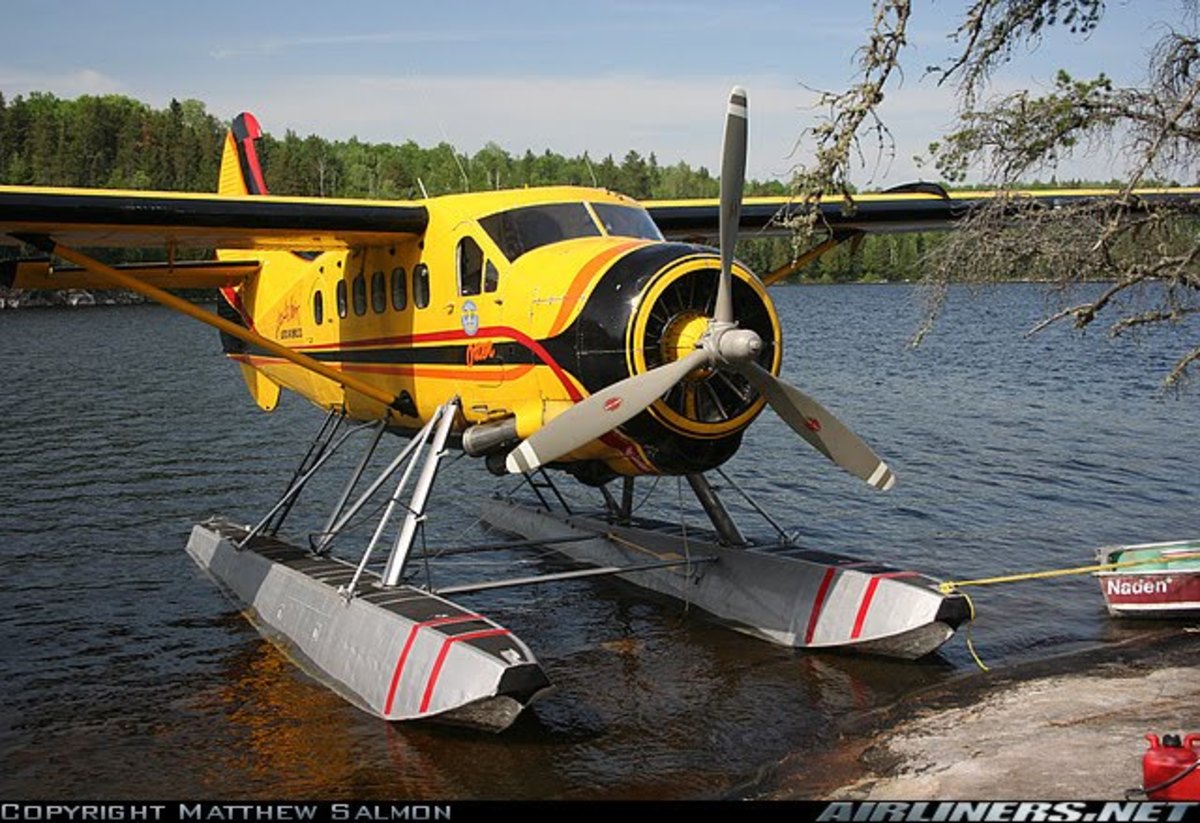
He, “Dutch”, was a bush pilot and was away up north for long periods of time. He would occasionally show up directly from work. One time I got an urgent summons from Mrs Schornhurst who told me Dutch had radioed (she had a massive transceiver in the house) to say he would be landing his float plane on the river in front of a small park on the other side of the Lakeshore Road from our house. “Could you go out in your canoe and help him tie up? she asked. “Sure,” I said, honoured, and immediately took the canoe down to the water and paddled out to the swimming raft on its fixed moorings. Mrs Schornhurst and I both assumed he would tie up there and that I would paddle him ashore, but Dutch had other ideas. He did a low fly by to check out the scenario (by this time a small crowd had gathered on the rise above the shoreline) and then gracefully dropped on to the surface of the water and taxied towards shore. He signalled me to keep clear (perhaps concerned about chopping my head off with his prop) and simply ran the front of his floats straight up on to the stony beach, switched off his engine, climbed down on to the port float, trotted to the shore end, and jumped off into the arms of his adoring wife.
He casually left the plane there and disappeared with her into their house. A few hours later he reappeared and single-handedly re-launched his plane, fired it up, taxied out into the wider water, turned into the wind, and took off. A final fly by with an elegant dip of the wing to his wife and he was off up north again.
One particularly cold winter morning I was out with my dad Henry trying to dig his Mercedes out of the snow. Like most Canadians we had a “block heater” on the car which plugged into the house mains. This was supposed to keep the oil warm enough to make starting the engine possible in sub-zero temperatures. Regrettably, neither this nor our array of battery chargers and sprays and boosters was having any effect on that elegant car and Henry was beginning to lose his rag. As we struggled with the beast, Dutch appeared in his driveway opposite with a camp stove under his arm. He waved a cheery “hello” and proceeded to light the stove and shove it under the engine of his battered Volkswagen. To Henry’s chagrin (“He’s going to blow that damn thing up!”), Dutch then disappeared back into his house for breakfast. Twenty minutes later he re-appeared as Henry and I were still contemplating the unresponsive Mercedes. He pulled the camp stove out from under the Volks, folded it up and handed it to his wife standing in the doorway, waved to us again, got in his car, started it first time, backed up on to the road, and drove off.
One day Dutch asked me if I wanted a summer job. His bush company – Wheeler Airlines – needed a “ground guy” to work the radio and drive the truck in support of the pilots flying in and out of Knob Lake (now Schefferville). “You won’t have to do much,” he said, “and the pay is pretty good.” I leapt at the chance and, a couple of weeks after school finished, I was flying with him in his Lockheed twin out of a small airfield to the north of Montreal.
In his element, he was still the same friendly smiling man, but with headphones and a mike on his head and a strangely dispassionate voice for use over the radio. The Lockheed was actually not a proper bush plane. It was a twin engined “executive” job with no floats but with some relatively comfortable passenger seating in the back. It was one of Wheeler’s prestige acquisitions and Dutch was the man they entrusted with it. It was a beautiful machine as it glittered in the clear sky above the clouds. Sitting in the front as the “co-pilot”, I had an unfettered view of the entire magnificent panoramic.
A few hours of droning later and we came in to land at a gravel airstrip in the middle of forest and wetland. We taxied up to “the tower”, which was just an insulated shed, and parked up beside one or two other craft. As we disembarked we were met by a guy called Karl, another Wheeler pilot with a thick German accent, who drove us to our home. “Home” turned out to be a grubby brown trailer (caravan) with four bunks at one end, a sitting room at the other, and a tiny kitchenette and a shower/toilet in between. This was where Dutch and Karl (and now me) spent the non-flying hours, with occasional visits from other Wheeler pilots who might be passing through. The tiny kitchen was dominated by a huge crackling radio transceiver which regularly interrupted conversation with indecipherable pulses of louder and softer crackling. Whenever it did, all the pilots present would pause and listen, but, apart from one super loud transmitter from Rapid Lake, I couldn’t make out what was being said at all. The guys said, “You’ll get used to it,” and after a week or so I did begin to make out the strains of coherent messaging.
We didn’t eat in that trailer (thank god) but went over to the only hotel in town where Wheeler kept an account for its pilots, and very nice it was too (the cherry pie was spot on). We ate at silverware set tables with napkins on our laps, listened to ambient muzak, and avoided swearing. Actually, to be fair, the worst thing I ever heard Dutch say was “that son of a gun”, or its plural “those son of a guns”.
My duties seemed vague at the best of times but occasionally I was left on my own in the trailer while the guys were out flying around. As chief radio operator I found I had to overcome a strong natural inclination to crack up every time I tried to speak into the microphone. I had to say things like, “Nanaimo Nanaimo Nanaimo, this is Knob Lake, do you read?”, but I would be reduced to private helpless tearful solitary fits of belly laughter every time I tried. I had to break the message into parts, releasing the transmit button as the senseless consuming laughter intervened. The other problem of course was that I still couldn’t make out the bulk of the response and was forever saying, “Repeat please…” Both problems settled down in due course and I became a bit of a radio nut, trying to find out whatever I could about the far-flung voices and their owners. Not easy when you’re on commercial airwaves with everybody listening in but informal codes allowed for a certain amount of latitude.
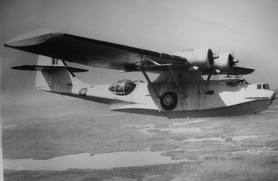
The best part of the job of course was flying with Dutch. If Karl wasn’t on a job he would be left in charge of the radio and I would go up in the Lockheed or the Otter or the Beaver or even in the enormous grey Canso “water bomber”. This latter was a ponderous flying boat with a single straight wing fixed across its back upon which hung two huge sputtering roaring engines. This unusual layout allowed for belly landing in water without getting the props wet and meant that the pilot could look up and back to reassure himself that the engines were still there and working properly. It was an ex war plane and still had gun turrets which were glassed over and provided extraordinary view points. One was in the very nose of the plane and I spent a lot of time up there being able to look straight down at the infinite forests and lakes and rivers and, best of all, bracing myself for impact and thunderous splashes whenever we put down on water.
They were called water bombers because they were used to combat forest fires. It would draw water on board whilst cruising on a lake, take off like a hugely overweight goose, and drop it by the ton as directed by fire fighters. I regret I never had the opportunity to go on one of those missions, but years later, whilst lying on a beach in Corsica, I had the privilege of watching a pristine white Canso landing on the Mediterranean, taking heavily off, and dropping it’s vast sheets of water on a hillside brush fire on the other side of my small bay. It was, as they say, a beautiful thing, turning in the sunlight and repeating its routines until the fire was doused.
The Otter and the Beaver were the standard single engine bush workhorses with floats you might see in your mind’s eye as you think “Canadian bush plane”. However, whereas most bush planes are aircraft designed for other purposes and adapted for use in the bush, the Otter was designed and purpose built from the ground up. The clearest example of this is the main door on the side which is shaped like a flat cornered triangle. This allows for 45 gallon fuel drums, the standard unit of northern fuel distribution, either to be pushed in standing up on end or rolled in on its side. A very useful and considerate feature. We used to land on glassy lakes in the middle of nowhere to push drums out the door. “Fuel is lighter than water,” said Dutch when I first queried the wisdom of doing this, and we’d float them to the shore (where we’d immediately be attacked by hordes of mosquitoes and blackfly), roll them up on to the bank, and set them upright. There were fuel depots like this all over the north country. The pilots knew where they were and carried their own hand pumps to refuel directly from the drums.
Those exquisitely beautiful glassy lakes could be a problem. “Sometimes they’re so clear and still that it’s hard to judge your touch down,” Dutch once pointed out as we were coming in, and I could see, unequivocally, what he meant. As we dropped I looked down straight to the bottom of the lake with no clue as to where, between us and that bottom, the surface of the water might actually be. “Sometimes I make a pass first just to try and ruffle it up and make some waves. It can be a real problem coming down right.”
Those 45 gallon drums littered the north, either full and awaiting pump out or empty awaiting rust. Many were re-cycled in imaginative ways, most often as floats for piers and quay sides or, cut length or side ways, as wood burners. On one of the lakes not far from town Dutch and Karl concluded they needed a more permanent pier but didn’t want a floating one. “Too easy to fall off,” they agreed. After a bit of hemming and hawing they cut the tops off several barrels – using axes. I watched incredulously as they, more or less expertly, hacked and hewed until the tops fell away. They then rolled the barrels into the water and stood them on end. With one of us holding a long thick post in place at the bottom of the barrel, the others would heave in rocks until the barrel sank. When two barrels were thus in place, they connected the posts by hammering timbers into them a couple of feet above the water. Planks were then laid from the shore on to the cross timbers. Once the whole thing was reasonably steady, they rolled out two more barrels and repeated the process off the end of the nascent pier. By the end of the day we had about a dozen pairs of barrels supporting a perfectly respectable pier extending far enough out into the water to host an Otter.
Normally this sort of mucking about at the water’s edge would have been just my cup of tea, but the whole thing was set within an infuriating backdrop of insect feeding frenzy. Clouds of the buggers would swirl around our heads as we worked, stimulated to even greater degrees of madness by our outpourings of sweat. I was used to a certain amount of assault from mosquitoes, but these ones were huge, hungry and determined. But even they were as nothing compared to the blackfly. “They don’t just land and bite,” Dutch warned. “They land and crawl under your clothes and bite.” Even though we worked with our collars and cuffs buttoned tight and with hats pulled hard on to our heads, by the end of the day I had furiously itching bites all over my body. None of us smoked cigarettes, but we all lit up there to try to keep a bit of smoke about our faces. Dutch and Karl demonstrated their technique of regularly doffing hats to blow huge puffs of smoke into them before jamming them back on to their heads.
The flies are the great preservationists of the Canadian north country. If it wasn’t for them there would probably be motorways filled with cars and caravans stretching all the way to the Arctic Circle. But, in order to make life bearable, isolated towns like Knob Lake had to resort to less and less environmentally friendly methodologies. When I was there the streets used to be regularly patrolled by tanker trucks with spraying devices lashed on the back. They would circulate the roads of the town like squat dung beetles spewing out a ghastly cocktail of DDT and paraffin. God knows what they’re using up there now.
Sometimes individual clients might come through the Wheeler channels. These sporting “outdoorsmen” tended to be high earning city professionals coming up for a bit of genuine wilderness hunting or fishing. They would have their canoes or kayaks strapped on to the float struts and get dropped off in one of the infinite lakes with all their camp equipment and baggage and left to fend for themselves until some predetermined date. Sometimes the isolation (and the insects) would get the better of them.
One pair of American lawyers came through our trailer very congenially only to return a couple of weeks later morose, dark, and unspeaking. “They were “bush” for sure,” said Dutch after they’d left, “When I flew over them on my first sweep, those son of a guns were in their kayaks swinging paddles at each other’s heads. When I got down I could see blood. I wasn’t sure I even wanted them in my plane.” All the pilots used to roar with laughter at the tales of bush madness they exchanged. “If one of them is talking to himself when you pick him up that’s not a problem,” they used to say, “but you know he’s “bush” if he’s answering back.”
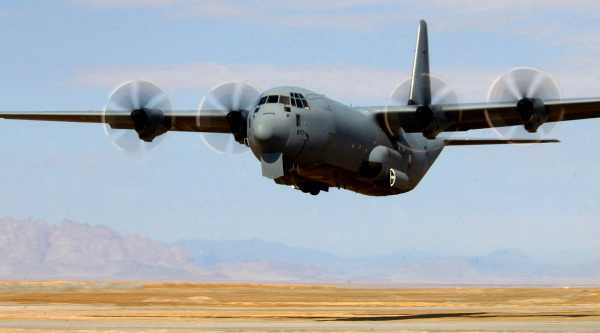
The Canso was usually the largest aircraft you’d ever see on the gravel airstrip, but one day I was astonished to see a massive four engined Hercules military transport circling. I dashed over to the strip to watch it coming down. It touched at the very farthest end of the gravel runway, like a huge madly fluttering grey dragonfly, and almost immediately set its turbo props screaming in reverse thrust as it tried desperately to come to a halt before it ran out of road. It screamed past us standing at the tower shack, hurtling down the strip like a runaway train, and came to a halt at the other extreme end, turned majestically, and loomed back towards us. The scale of the thing seemed all wrong as it pulled up, the height of a three storey building, in a cyclonic whirl of dust and gravel and, one by one, shut its engines down. We stood there in the sudden calm and silence like terrestrials awaiting the opening door of an alien space craft. A huge ramp dropped down beneath the tail section and, moments later, the crew emerged looking like a bare headed Apollo work party. As they approached with their other-worldly ship filling the sky behind them, we could see that they were, after all, mere mortals and were joking and clowning like a bunch of bush pilots.
It turned out, as well, that they were to be in the neighbourhood for a week or so and that what to me looked like an extreme emergency landing was to be executed many more times over the next few days. They stayed at the hotel so we often met for supper and they invited me on board their craft for a look around. As I walked up that ramp at the back I simply couldn’t imagine, despite having seen it with my own eyes, this enormous hangar leaving the ground. At the end of the vast space was a stairwell leading up to the flight deck. I’d seen commercial airline flight decks so was prepared for a plethora of dials and gauges and levers stuffed into impossible places around the pilots and navigators, but the first thing that struck me on the Hercules was the veritable opulence of space. The pilot and co-pilot sat yards apart in front of an enormous front window the size of a cinema screen. The navigator and radio operator were yards away again behind them. I felt like I was in a large technologically advanced ball room. I never flew in that thing but I was always enthralled by its comings and goings.
The time came when I had to leave to go to university. A late letter arrived giving me notice of dates and I realised I would have to hustle. Both Dutch and Karl were out on missions so I had to let them know over the air waves, with the northern bush plane community listening in. Unexpectedly, many kind words and good wishes crackled through the speakers from well wishers I knew by sound but had never met, but I felt a surprising grief as I said goodbye to Dutch.
In fact I never saw him again. Over the following years I would occasionally pop round to see him but he was always “up north”. I’d chat to his Mrs in her unchanging front yard as all around her the old houses (including ours opposite) were being knocked down to make way for monstrous stone clad suburban palaces.
Then one time she said, “Oh I’m really sorry I wasn’t able to tell you. Dutch died when we were on holiday a couple of years ago.” I stared, aghast and speechless, into her puffed and still deeply distraught eyes as she told me in a flat voice how they’d driven west on a long planned for expedition to the Rockies. “He had a heart attack while we were crossing the prairies. I had to drive back with the kids.” She stood there, arms folded, rooted and haunted, in front of her little slightly ramshackle clapboard house in a misfit time warp as the grotesque palaces and upmarket lifestyles rose all around her.
.
© 2012 Deacon Martin
.
Doyle Revolution ’65
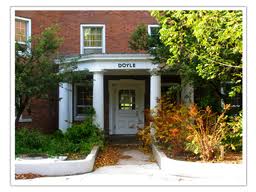
Was I going to try to kill him…?
In the real world outside the residences, the university was going through it’s lugubrious “freshers’ week”, another stupid set of conventions adopted, I guess, from stupid American universities whereby first year students or “frosh” were expected to do anything – no matter how stupid or undignified – their elders and betters asked of them. Everybody seemed to think there was a natural order to this, but I’d never heard of it and told a lot of people to fuck off. Nevertheless, resentments were building up and, at the end of “frosh week”, in my first mob bonding experience, I joined with a bunch of other first year students from Doyle and went on a rampage. In groups of fifteen or twenty we went looking for some of the worst perpetrators and dragged them from wherever they were hiding into the nearest showers, disrobing them ungently on route and leaving their clothing strewn about the campus. In true “night of the long knives” fashion, there were skirmishes and incidents throughout both male residences and all areas in between.
On one occasion I found myself chasing “Big Chris” (half again as tall as me) across the lawn in the half light between the dining hall and Doyle with a pack of howling buddies just behind. I caught up with him quite easily and, pulling up to his left side, ran for a couple of strides next to him wondering what to do next. In the end I simply reached across his back, grabbed his right arm and pulled. As his body twisted his own momentum brought him crashing to the ground and he disappeared in a welter of maddened first year bodies. It took a lot of them to do the business on him. He was a big lad.
On another occasion I spotted a particularly odious prick from Rothermere House legging it around the corner of his residence. I shouted to my posse and took off after him. As I rounded the corner I saw him disappear through a window into a laundry room. Without thinking I darted in after him and managed to corner him as he was getting to his feet. For a moment we crouched facing each other in complete silence as it slowly dawned upon both of us that the likelihood of my reinforcements arriving was diminishing with every passing second. They probably hadn’t even seen me pop into the window or perhaps got distracted by some other prey. As I was contemplating the implications, the guy suddenly made a dash for the door and, without thinking, I tackled him. He was older and more substantial than me so it was a fairly hopeless undertaking. Nevertheless we continued to wrestle in complete silence and, for me, complete ignorance of any intended outcome. Was I going to try, single-handedly, to undress him and throw him in the shower? Was I going to try to kill him?
It all seemed implausible and pointless in the absence of a baying mob. For a moment we both relaxed our grips on each other as we gasped for breath, and then suddenly he summoned his last remaining resources and made a final desperate lunge for the door. I was too pooped and under-motivated to respond and sat there on the tiled floor waiting for my strength to return. I never ever spoke to or engaged in any way with that guy again, but we would occasionally pass each other in the course of our subsequent university lives, carefully avoiding each other’s glances.
Returning to the fray I discovered that it had peaked and that most of the senior guys had disappeared or formed themselves into large enough groups for us to think twice about engaging. It was now the early hours and everybody began to filter off to bed. The uprising dissipated as the uprisers, one by one, went down.
In the bright light of the following day, everybody at Doyle made friends again and the first years revelled in a new level of respect from their seniors. There was a lot of back slapping and laughable recollecting. It was already a fond memory and tales were retold with ever escalating embellishments. I got mentioned in dispatches and commended for “tackling” Big Chris, who turned out to be a very nice and gentle guy and a staunch friend.
.
© 2013 Deacon Martin
.
.
Bay Talk ’65
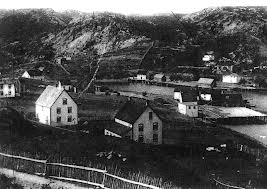
They told stories about life back home which beggared belief….
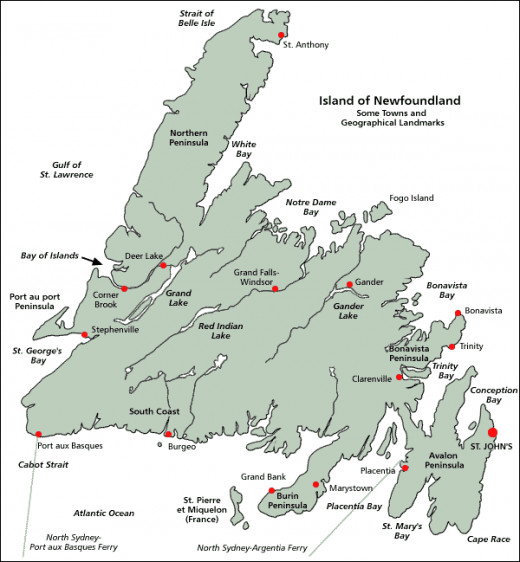
In the course of the next few days and weeks I learned that everybody who came from St John’s, Newfoundland’s provincial capital and home to all it’s rich and ambitious, were “townies”, and that everybody else was from “the bay” – the generic term for all the outport communities dotted around the island’s rugged coastline. The term also applied to places like Gander, Grand Falls, and Corner Brook which were sizeable towns and not even on the coast. As for the rest of the world, it was known simply as “the mainland”. I was clearly a mainlander and this was referred to in nearly every conversation I had for the entire first term.
Those early classes made very little impression on me. I was drawn mostly to the various cultures of the bay as characterised by my co-habitants at Doyle House. They came from places like Gambo, Fogo, Little Seldom, Jackson’s Arm, Badger, Bonavista, Old Perlican, Cape Saint Mary’s, and Portugal Cove. Their fathers were fishermen and loggers and miners and unemployed. They swept into St John’s on a tide of largesse from the provincial government which was trying to get them to upskill and move away from a dependence on nature.
They addressed each other and everyone else as “boy” (pronounced “bye”) and spoke mind-bendingly fast with a vaguely Irish lilt and a wit that outstretched mine by many leagues. They told stories about life back home which beggared belief until I slowly realised they were indulging in their favourite conversational sport – telling increasingly incredulous lies to an unsuspecting muppet.
I might pass a room with an open door and hover as five or six guys might be sitting on the beds chatting. One of them would introduce a modest lie about anything under the sun. In the blink of an eye someone else would give it an insignificant embellishment, another a barely noticeable polish, until the whole thing became so outrageous that even they couldn’t keep their faces straight any longer. I was a favourite target because I was so gob-smackingly earnest and naïve and a mainlander to boot.
Some of the most satisfying and privileged moments of my early university life were occasions when I was, at long last, allowed to participate in such conversational scams being played out on other baymen.
 .
.© 2013 Deacon Martin
.
.
.