…..from A Squandered Life / the 1950s
.
Jeremy / Eberhard ’52
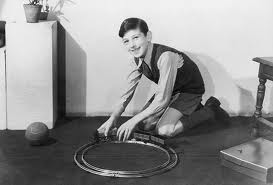
I tried frenziedly to punch them to death….
One day Mari-Ann announced that we were going around to visit some people called Mortons in the village. For some inexplicable reason she wanted us to scrub up and put on some clean clothes, but she happened to mention that there was a boy there who had an electric train, so we were very quickly on programme.
We were shown, smart and clean, into a house full of strangers but I didn’t clock any of them. All I could think of or do was look and look for this fabled train. After what seemed like an eternity, the boy of the house – introduced to us as Jeremy – led the way down to a playroom in the cellar. As I came down the stairs I saw a circle of track on the floor and, as I got closer, made out a magnificently industrial looking black engine and some ornate wagons. These were impressive enough in themselves, but Jeremy squatted down beside an ominous looking pale green metal box with a big fat dial on it and wires trailing in and out. He threw a switch and something hummed, but as he turned the dial, miracle of miracles, the train began slowly to move. It headed off down its track, untouched by human hands, and picked up speed.
Jeremy got it clattering around its circuit like a chattering box of scissors, and looked up at us, beaming with pride. We watched, dumbstruck, overwhelmed by the sight and the sound and the smell of ozone which somehow magnified the importance of what we were seeing. After a few moments of mesmerised rapture, Jeremy upped the ante by asking us if we’d like to turn the dial. Harry and I looked at each other, then scrambled over to the ominous metal box and took turns making the train slow down and speed up and slow down and stop and start and speed up and so on for what seemed like forever.
Not long afterwards Jeremy and his family moved two doors down from us on the Lakeshore – into the very Cobweb Manor – and our relationship with him and with the Manor was ratcheted up a few gears as we found yet more in common. Jeremy fit chronologically between myself and my brother. This meant that he was more in thrall to Harry and more likely to be dismissive of me. This created interesting dynamics because Harry, by the same chrono-logic, was often dismissive of Jeremy. Our lop-sided triangle was sometimes augmented by the appearance of Eberhard, a friend of Jeremy’s from his previous life. Eberhard used to pick up on the nuances of our three-way relationship and would find them hysterically funny. This would usually set Jeremy and Harry off too which left me not understanding what the fuck was so funny, odd man out, and getting angrier by the minute – which made Eberhard laugh even harder and spin the whole thing even further out of control. I recall getting so enfuriated that I would physically attack all three of them, but they were so helpless with laughter that all they could do was collapse in the face of my onslaught and roll on the floor as I tried frenziedly to punch them to death.
Jeremy’s chrono seniority to me was reinforced at the school playground when I eventually made it to there. He would appear with a mob of his mature mates and condescendingly say “hello” and swoop off to do whatever mature boys did. To be fair, I saw more of him than I did of my brother who always seemed distant and totally immersed in even more mature processes. But Jeremy didn’t stay long at that school and was soon spirited off to a private one by his British parents who bought into the value of such things. So our association with Jeremy became exclusively a holiday one which I suppose gave it an extra fillip.
from A Squandered Life / Bucky
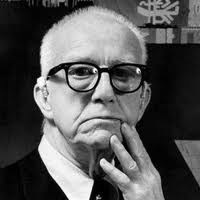
….should I pace about aching until day or another solution dawned?
One of Henry’s main claims to fame was his strength as a “networker”. His appetite for blagging stood him in very good stead for this. He was a very entertaining guy and never at a loss for words. In his capacity as “design consultant” for Alcan he networked with all kinds of extraordinary people – artists, film makers, writers, architects, designers – and a veritable parade of them would pass through our home to get the full scale treatment of cocktails, Mari-Ann’s elaborate dinners, and Valpolicella.
Perhaps the most luminary of these was Buckminster Fuller who appeared in our midst like a dark suited gnome with huge black rimmed glasses and a bristling white pate. He was introduced to us as Bucky and would lean forward with his enormously magnified eyes and sobrely shake hands each time we met. Unlike many of the others, he would actually remember our names and to hear him speak in his quiet sonorous voice was always a pleasure. His quiet and Henry’s profound respect tended to mean that Bucky’s visits were less boisterous and bombastic than the norm. Bucky could maintain a monologue for such lengths that we would often doze off only to find, on re-awakening, that he was still talking and that all the adults in the room were still hanging on his every word.
Bucky had an island off the coast of Maine. Bear Island was much bigger than the other island in our lives and full of the wonders of forests and rocky sea shores and even a resident flock of sheep. The ocean was much colder than the serene St Lawrence and therefore much less inviting, but on sunny days it was just as impeccably clear and full of visual evidence of thriving fish communities. On stormy days it was a totally different story. The Atlantic could turn grim and angry and would conspire with the sky to produce heavy rolling clouds to frighten us away from its shores with dark and threatening frowns.
The first leg of the journey to Bucky’s would be an interminable car drive from Montreal. This would be followed by what seemed like an equally interminable ride across acres and acres of rollicking waves in the boat of Bucky’s “foreman”, Pearl. Pearl was a local fisherman who also lived with his family on the island and was always on hand to sort out practical difficulties from leaking roofs to stranded sheep. He also supplied fresh lobster on demand.
We would pass islands en route in the vain hope that this was, at last, our destination and then, as hope expired, Pearl would pick one and steer towards it and eventually pull into a little bay. Here was a substantial and sturdy wooden pier and we would lash up in the calm protected waters. We would drag our bags off and lug them ashore and up a rocky path for a ten minute walk through small fields and bits of forest towards a large house on the eastern shore. This was a massive three storey wooden affair which creaked almost us much as our house at number 32. It was also usually filled with at least one other visiting family as well as Bucky’s own.
Just like on our other island, toilet facilities consisted of a foul smelling outhouse. This one was a four seater, located about a hundred yards from the house, teetering on the edge of a steep cliff, which dropped onto tidal rocks far below and so required very little maintenance. We were assigned rooms up in the very top of the house which meant that when I awoke at night with a full bladder, which seemed to be most nights, I was faced with some stark choices. Should I try and make my way through a strange and pitch black house, creaking and squeaking on the wooden floors and stairways past nameless sleeping bodies, and then across the darkened hundred yards of unfamiliar rough ground to the cliff edge outhouse? Or should I pace about aching until day or another solution dawned? Not much of a choice really. On that first night I paced for what seemed like hours of solitary until, at one end of the paces, at the window overlooking the invisible meadow below, I happened to spot a gutter running just below the sill. Delirious with the promise of relief I slowly and surreptitiously lifted the lower window up, aimed, and let rip such a stream in such a state of bliss that I nearly passed out. This became my improvised routine for most of the nights that followed.
Towards the end of our stay I happened, through my childhood fog, to notice that there weren’t any taps in the house. I realised that people were carting water around in buckets but I knew they couldn’t be getting it from the rocky shoreline in the way we did from our other island in the St Lawrence. Even I knew you couldn’t drink sea water. One morning I followed a friendly adult carrying an empty bucket to a well in the form of a large cinder block tank around the side of the house. I watched him dip in and lift a full bucket out. “Can I look in the well?” I asked, and he lifted me up so I could look over the edge of the cinder wall. “But it’s not a well,” he said. “Our drinking water is the rain. See the gutters running down from the house?” Horrified, I looked up the lengths of guttering branching out around the house – one branch of which ran all the way up to our bedroom window on the top floor.
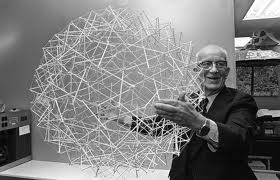
On one of our visits we were all called upon to erect a geodesic dome from an experimental flat packed kit being pioneered by the now unreservedly evil Monsanto corporation. Henry and my brother Harry seemed to get into the heart of the project, building a circular wooden platform on thick stilts pounded into the ground. On top of this the pre-fab triangular sandwiched polystyrene panels were assembled with aluminium bolts and washers.
For some obscure reason I was given a hammer and a cold chisel and asked to cut a groove into a slab of granite to the side of the platform. I managed to generate some blisters, a bit of blood, and some bruising, but no identifiable groove. It didn’t seem to impact on the overall project though. The magnificent little dome emerged from the collective labours and in due course stood proud like a mini astronomic observatory in it’s clearing in the trees. The interior was bright and spacious with slightly resonant acoustic properties. It was also a safe heaven from heavy winds and rain and provided great play space while the adults tried to figure out what it could best be used for.
In the evening of the day of completion, Bucky launched into one of his interminable monologues. As I drifted in and out of it, I heard him refer to “a couple of boys” who’d earned a prize. I woke up on the assumption that Harry and I were to be awarded something but it turned out that Bucky was conferring his personal “dymaxion award” to couple of the men who’d helped out on the development of the flat pack dome. I don’t think I was alone in my disappointment. I remember seeing Henry’s face and thinking he seemed more put out than me.
A few years later, he earned his own dymaxion award from Bucky and showed us the tiny little silver latticed globe with evident pride and pleasure.
© 2013 Deacon Martin
…from A Squandered Life / My Dog Ben
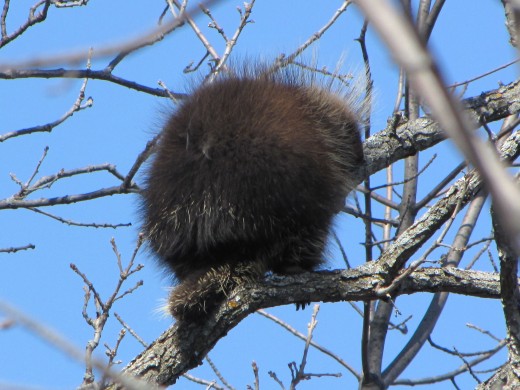
Skunks and Porcupines
I did a lot of tramping through the woods with Ben. There was a beaver pond on the north east edge and we would go up there as silently as possible and then just lie down at a vantage point to see if they would come out. I never saw those beavers without waiting. No matter how silently you approached, they always knew and kept still and out of sight until, through some beaver signal, they agreed it was safe to come out again. We would lie there and watch their interminable to-ing and fro-ing as they dragged sections of tree to the dam or to their lodges or to some underwater store for future reference. If they became alarmed again one or other of them would slap their wide flat tail on the surface of the water and they would all disappear once more.
Ben also discovered a couple of other creatures to his personal cost. The first was a skunk. We came upon him suddenly in a little clearing. He had his back to us, but instead of scampering he slowly drew himself into an elegant handstand, peering all the while around his shoulder. Ignoring me completely he knew immediately where the trouble was likely to come from and fixed his black beady little eyes on Ben. There was a millisecond pause and then, before I could say or do anything, Ben advanced for a closer inspection and was rewarded with the briefest of bursts of a fine spray from the skunk’s uplifted butt. Ben wheeled and shot off into the trees, shaking his head furiously. I looked back at the skunk. He was now looking at me. I backed up and, without taking his eyes off me, he slowly dropped down from his handstand and waddled casually off into the bush. I found Ben and urged him into some water, but his eyes got inflamed and he stank for days.
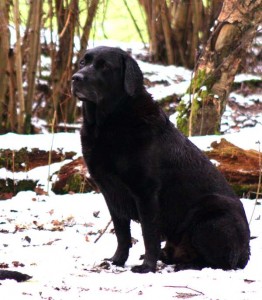
Another time, much later, we encountered a large porcupine. Again, before I could react, Ben was in there for a closer look. Quick as a flash the porcupine’s tail flicked out and caught him in the face.
That poor dog. He shot away with a mouth full of bristling quill ends. When I found him he was groaning and trying to lick and paw the quills out. Miraculously he didn’t get any in his eyes, but he had them in his snout, his gums, his tongue, and the roof of his mouth. I was desperate to help him but hadn’t a clue what to do other than encourage him not to paw. In the end I got him to follow me to Harold Lawyer’s farmyard where I thought I would find some local knowledge and expertise.
Harold was leaning on his fork, chewing tobacco and the fat with a couple of his farm neighbours. Without moving any other parts of their bodies, they all swivelled their heads as Ben and I came up the drive. “Oh my gawd,” said Harold, without moving. “You two found a porcupine.” “What should I do?” I pleaded. Harold and his pals regarded Ben a little longer, chewing and thinking. “Ain’t nothin you can do but pull em out,” he eventually concluded. “There’s some pliers over there on the tractor.”
I was aghast. Pull them out? One by one? Me? It was clear that those guys weren’t going to demonstrate any local expertise and I numbly went over to the tool box attached to the side of the tractor and dug out some pliers. I sat down on the ground, spread my legs, and got Ben to lie down on his side between them. I rested his head on my right leg and lifted my left over his shoulders and laid it down across them. With my left hand on Ben’s head and the pliers in my right I set about, one by bloody one, picking those buggers out. Each one made a little tearing sound as the barbed ends came out.
Ben flinched but never made a sound. “Never seen anything like that,” said one of the neighbours. “Used to have to tie my dog up and wedge a piece of wood in his mouth.” Harold and the other farmer murmured their concurrence, shaking their heads in disbelief. For the next hour or so, those guys stood there, chewing and remarking, as Ben and I went through our shared parcel of hell together. He lay there patiently as I went to the very back of the roof of his mouth to pull the last few shards out. At long last all seemed clear and I let him up. He got to his feet and shook his head, blood spattering from his mouth.
“I swear,” those farmers said as I got up, “Never seen a dog like that.” Harold even broke his stance to go indoors and get a massive bowl of water. “There you go feller,” he said as Ben sloshed and slurped his blood and his pain away. “My gosh,” those guys were still saying as they resumed their still group portrait and Ben and I walked back down the drive.
On another occasion, much later again, Ben and I once more encountered a porcupine (perhaps it was the same one). As before, Ben spotted him first but this time kept a very respectful distance. The porc was motionless halfway up a small tree and I tempted fate by picking up a healthily long and robust piece of branch with which to touch him. He flicked his tail at the branch so suddenly and with such force that I felt as if I’d received an electric shock – the massive jolt coursing down the length of my arm.
I was staggered. Even without the quills that felt like a very serious weapon. WITH the quills, and in your face? I looked at Ben. He was clearly wondering what I was playing at, but my respect for him shot up exponentially.
© 2012 Deacon Martin
the Grannies ’57
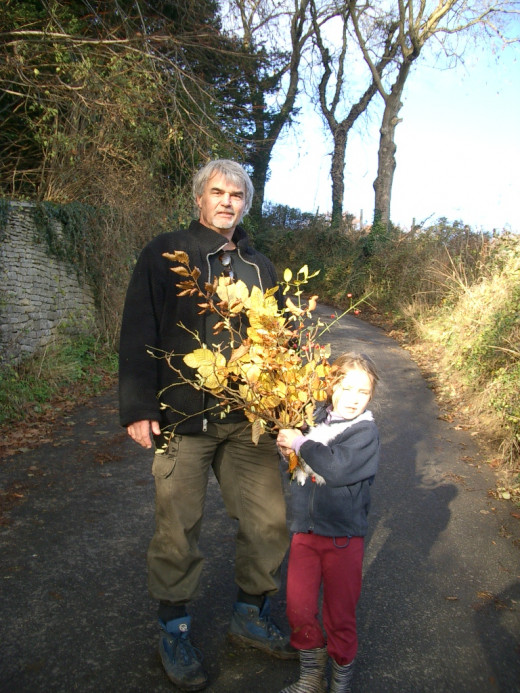
the Grannies
We had two grannies – one in Great Leighs, Essex and one in Loughton, north London. Loughton Granny was the one who lived in White Cottage with Gaffer. We discovered they were quite well to do. The “cottage” was actually a massive house and had an enormous garden complete with tennis courts and apple orchard. Gaffer even had a chauffeur, Knight, who wore a peaked cap and drove us around in a Bentley. Loughton Granny took us all over central London. She took us to zoos and museums and parks and restaurants. We saw Nelson and Trafalgar and Piccadilly. We saw suits of armour and swords and chain mail and models of sea battles. We drank tea and ate cakes and went into vast department stores.
A true royalist, Granny briefed us on the royal family (although I couldn’t understand how anybody could be a prince of whales) and took us to see palaces and guards changing and flags waving. For me the best bit was the chestnut vendors selling from their pavement stoves. Smelt and tasted like the deep forest in the middle of this endless city. Knight would loyally turn up with prescient punctuality (no mobile phones in those days) to waft us from one scenario to another.
Granny gave me a watch, only to recoil in horror when she discovered I couldn’t tell time. For the rest of our stay she did time checks with me. My treasured watch and the huge clock on the kitchen wall feature largely in my memories of those days, but it took a while to grasp the concept of three concentric dials simultaneously signalling different but integrated bits of abstract information. Exasperated, I once said to Harry, “I wish I could tell time like you.”, to which he answered, “But you can whistle, and although I’ll never learn to whistle you will learn to tell the time.” I was impressed by his logic. And, do you know, all these years later, I can now tell time and he still can’t whistle.
One day Gaffer took us to see his enormous office with its vast desk and outlying receptionists and secretaries. I recall ancient looking oil paintings on the walls and comfy leather chairs for intimate chats. But mostly he liked to show us his apple trees back at the house, and the apple barrels in the cider cellar where he used to press them by hand. He introduced us to croquet and I could at last see the purpose of a well kept lawn. When Knight wasn’t around, Gaffer used to drive us in his own sombre but impressive black and chrome Humber to Epping Forest and to shops and parks in the vicinity.
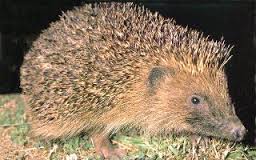
At one point we found a strange prickly ball. To my eternal shame Harry and I started kicking it about, only for it to gradually unfurl as a now expiring little creature – our first exposure to hedgehogs. We were so ashamed we couldn’t even tell Granny and left it to die in the nettles. Years and years later, when I was living for a time at the cottage, I had the privilege of watching a pair of hedgehogs doing their moonlight jump/squeak dance. I was walking home from a tiny country pub in the neighbouring hamlet. The narrow lane passed a small walled garden at just below shoulder height. I heard the squeaks and my eyes were drawn to movement. My eyes adjusted to the soft moonlight shadows and my ears to the breathless air and I stood still as stone while they leapt and pirouetted. I was enthralled and transfixed and stoned enough to take it as a signal that the hedgehog community had, at long last, forgiven me.
As luck would have it, Granny also owned the even tinier tiled cottage next door which, while usually let, was empty at this time. There weren’t enough beds in the thatched cottage so Harry and I were sent to sleep over there. This was made even more exciting by the advent of our cousins Henry (known as Little Henry) and Joanna.
Little Henry and Jo suddenly appeared whilst we were playing in the two acres. We heard them coming but he proudly boasted that he had been “stalking” us like “Red Indians”. I didn’t understand either what stalking was or why he felt he had to specify the colour of Indians, but I liked his bombast and his booming laugh. We all proceeded to try to make bows and arrows and shoot each other. We even showed him where the dead hedgehog was.
Later, crowded round the tiny dinner table in the thatched cottage, I carelessly referred to one of my siblings as a turd. This brought about a stifled guffaw from Little Henry followed by strained silence. Little Henry’s mum Auntie Babs asked politely if I knew what a turd was. I said something like it was “just an expression” which was apparently not good enough. Little Henry was tasked with taking Harry and I out into the back shed to explain. Between strangled guffaws he said. “It’s what comes out of your backside.” Harry and I looked at each other. It became evident to Little Henry that we didn’t know what a “backside” was either. If he’d said arse or bum or bottom, no problem. But, backside…? With a bit of graphic hand signalling he made himself clear and, suitably chastened, we returned to the dinner table.
The fixation with turds and backsides continued as Harry, Little Henry, and I retired for the night to the same enormous bed in the tiled cottage next door. For some reason, god knows how or why, Harry occasionally referred to me as Misht. This came up in the course of our late night too-wired-for-sleep conversation, as we lay on our backs staring up into black space. I’d asked Harry not to call me that because I had discovered, through my mother, it’s true dread meaning in Swiss German. Harry had graciously, for the most part, stopped calling me Misht but I had never revealed to him the terrible secret of its meaning because I thought it would it lead to yet more teasing. Little Henry listened gravely to all this and eventually, in a quiet and respectful voice, asked, out of the dark, what it meant. It seemed churlish not to divulge now to our new cousin but I couldn’t. “But don’t you trust us?” asked Little Henry earnestly, putting me squarely on the spot. In due course, after some heavy negotiating, I extracted a hard and fast no laughing and/or teasing pact. “So what does it mean?” asked Little Henry quietly again. I said, “Manure.” There was a profound silence. Suddenly, exploding out of the dark and splitting the night air, came Little Henry’s booming crashing laugh. He couldn’t contain himself and of course he set Harry off too. “Misht the manure man,” boomed Little Henry into the darkness and they both creased up all over again. I don’t k now how we ever got to sleep but, to their credit, no further reference was made in the following days.
Granny introduced us to proper Swiss muesli. We’d pick fruit from the hedgerows and orchards and she’d cut and mash them up with oats to produce the most gorgeously succulent breakfast I had ever tasted. She used to go out into the lane after the big lorries carrying beans or beets or potatoes from the surrounding fields had thundered past to pick up whatever produce had fallen in passing. She also made lemonade cordial from copious amounts of sugar and lemon and doled it out generously in the middle of hot afternoons. She introduced us into her quiet and mysterious world of solitaire, or “patience” as she used to call it. What a beautiful, absorbing, and challenging paradigm that was.
Her front door used to open directly on to the country lane, just a few paces from the pavement itself, and I can still see her waving, crumpled and wrinkled, as she welcomed us or bid us goodbye.
© 2012 Deacon Martin
.
.
The Strap ’58

….immediately set alarm bells ringing down the vacant corridors of my mind.
I seemed to have a succession of teachers conspiring to protract my misery and to bring about my downfall. I simply couldn’t get into the rhythm of work, play, work, play. There always seemed to be an overwhelming imbalance in favour of work time, with the play time flitting away like litter on a dead and windblown street. I couldn’t seem to concentrate on the right things at the right time. I was called “dreamy” and “lazy” by professional adults who seemed to know what they were talking about.
It all culminated in my sixth year when I encountered the disturbed and chaotic Mrs Tinkler. This deranged madcap spent much of her time hollering at kids and telling us “I’m not afraid to fail anyone – even the children of important people.” This last was usually accompanied with a glare at me. I hadn’t a clue what she was on about, but years later I discovered that my dad was Chair of the PTA at the time. The fact that I was unaware of this, or even of what a PTA might be, didn’t seem to occur to Tinkler as she set about demonstrating her complete indifference to authority and social status. So my scholastic ineptitudes and complete lack of academic confidence were compounded by this mad harridan’s erratic methodologies and I found myself dropping to the bottom of just about every scoring mechanism in existence.
I wasn’t the only “victim”. She assaulted a boy called David who wept and later told his mum. The next day the Principal (or Head) took the unprecedented step of appearing in our classroom and politely asking Tinkler if she would leave for a moment. He then cross-examined us about the previous day’s events. To my eternal shame, neither I nor any of my classmates overcame our induced timidity to stand up and say, “Yes, the fucking bitch hit him.”, but I guess enough seeds of doubt were sown because, although she finished the year with us, she wasn’t in post the following year. Unfortunately, she took the liberty of failing me in the process and I experienced the ultimate humiliation of having to repeat the year. This was compounded by having to carry my final report card home and deliver it into the hands of my certain-to-be-livid dad. I found him shaving and, full of remorse and guilt, fessed up. To my amazement he never blew. I suppose he may have been forewarned but in any event he seemed resigned to my status as one of life’s failures and let it go without major incident.
But it wasn’t all plain sailing. One day Burnell had her back to us when Sally Johnston threw an eraser at me which ricocheted off a desk and then, appallingly, off the very blackboard upon which Burnell was busily chalking. There was an ominous silence as she stopped chalking and slowly turned, dark eyes ablaze, to ask in slow and steely tones, “Who…. threw…. that….?” The silence extended into a time tunnel of stillness until Sally couldn’t take the tension any more. “I did Miss,” she quietly owned up, “but I wasn’t throwing at you. I was throwing at him.”
The blazing black eyes slowly swivelled towards me (thanks Sal) and fixed me in their immobilising beam. The awful truth emerged that, yes indeed, Sally had merely been returning fire. This was clearly an offence worthy of a sending to the Principal’s office but, frighteningly, on this occasion Burnell actually accompanied us and went in ahead of us for a word.
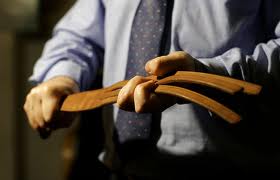
Sally and I sat outside contemplating our fate. “Do you think we’ll get The Strap?” she asked timorously. In my dozey world this hadn’t even occurred to me but immediately set alarm bells ringing down the vacant corridors of my mind. “The Strap”. The legendary punishment device of which we’d heard so much but seen nothing. My trepidation was tinged with a strangely eager anticipation. At least I’d get to see the damn thing.
As Burnell swept out of the office without so much as a downward glance at us, we were summoned. The Principal, MacIntosh, the same pleasant bald little man who had cross-examined us in Tinkler’s class the previous year, gravely appraised us of the seriousness of our misdemeanours and of the fact that, regrettably, we were to be awarded one stroke of The Strap to each of our pale and clammy hands.
One stroke each hand in exchange for seeing the thing itself didn’t seem such a bad deal to me, but my strange sensation of fear mixed with excited anticipation was shattered by the sound of Sally bursting into tears. To my utter astonishment, she began, through her tears, to beg for clemency. Sally was no push over. She was a tough perpetually jesting punch-your-lights-out tomboy kind of a girl. I was aghast. So to it seemed was MacIntosh, who, almost immediately, relented and, with firm strictures that this sort of thing “must not happen again” released us back into the wild. I was still watching Sally as we turned to the door and thought I caught a flicker of a smile.
Safely outside she said, “Well, got us off that one didn’t I.” I was impressed. Still am. But I never did get to see The Strap.
.
Robere ’59
….Kenny never caved in and the thwacks seemed to last forever.
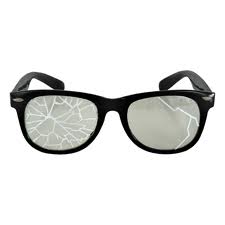
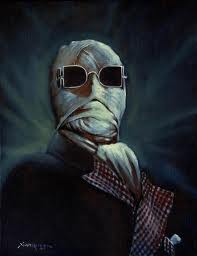
The principal of this school was a dark squat tubby man called Mr. Robere. He wore heavy black rimmed glasses which added to an air of menace whenever he appeared. The full extent of the man’s evil was thrown into horrific relief when, one day, at an apparently agreed hour, our teacher, Mr Nelson, told us all to be quiet.
As we sat expectantly we began to hear Robere out in the hall giving grief to some poor kid. At first it seemed intrusive to be listening in, but the appalling fact that this was orchestrated and that we were supposed to be listening in gradually dawned upon us. From the occasional stuttering responses I worked out that the victim was Kenny Wilson, a thoroughly likeable playground buddy of mine. I cannot remember the crime for which Kenny was being pilloried, but our horror escalated as we realised Kenny was about to get The Strap. Robere’s shouting stopped and, after a moment of ominous silence, we heard the first THWACK.
I for one flinched in my seat, but it didn’t end there. I think Robere was trying to make Kenny cry, but Kenny never caved in and the thwacks seemed to last forever. Even Nelson was looking decidedly uncomfortable. Eventually the drama ran its course and we returned to our class routine, but later, in the playground, we ran up to Kenny who, blinking steadily through his thick glasses, showed us his still harshly reddened hands.
Presumably the entire performance was meant to tie us in more closely to the school’s regime, but the outcome was completely the reverse. We admired and respected Kenny all the more whilst Robere sank even further in our collective estimation to the lowest form of bully and shithead.
.
© 2013 Deacon Martin